
SRMS Institute of Medical Sciences · Advanced Critical Care

When Every Second Counts, Every Breath Matters

Region's First ECMO Facility Between Delhi & Lucknow

When conventional treatments are no longer enough, Extracorporeal Membrane Oxygenation (ECMO) provides advanced temporary heart and lung support — giving critically ill patients a greater chance of recovery. SRMS Institute of Medical Sciences, Bareilly, proudly introduces the region's first ECMO facility between Delhi and Lucknow, bringing world-class critical care closer to families across Western Uttar Pradesh, Uttarakhand and neighbouring regions.
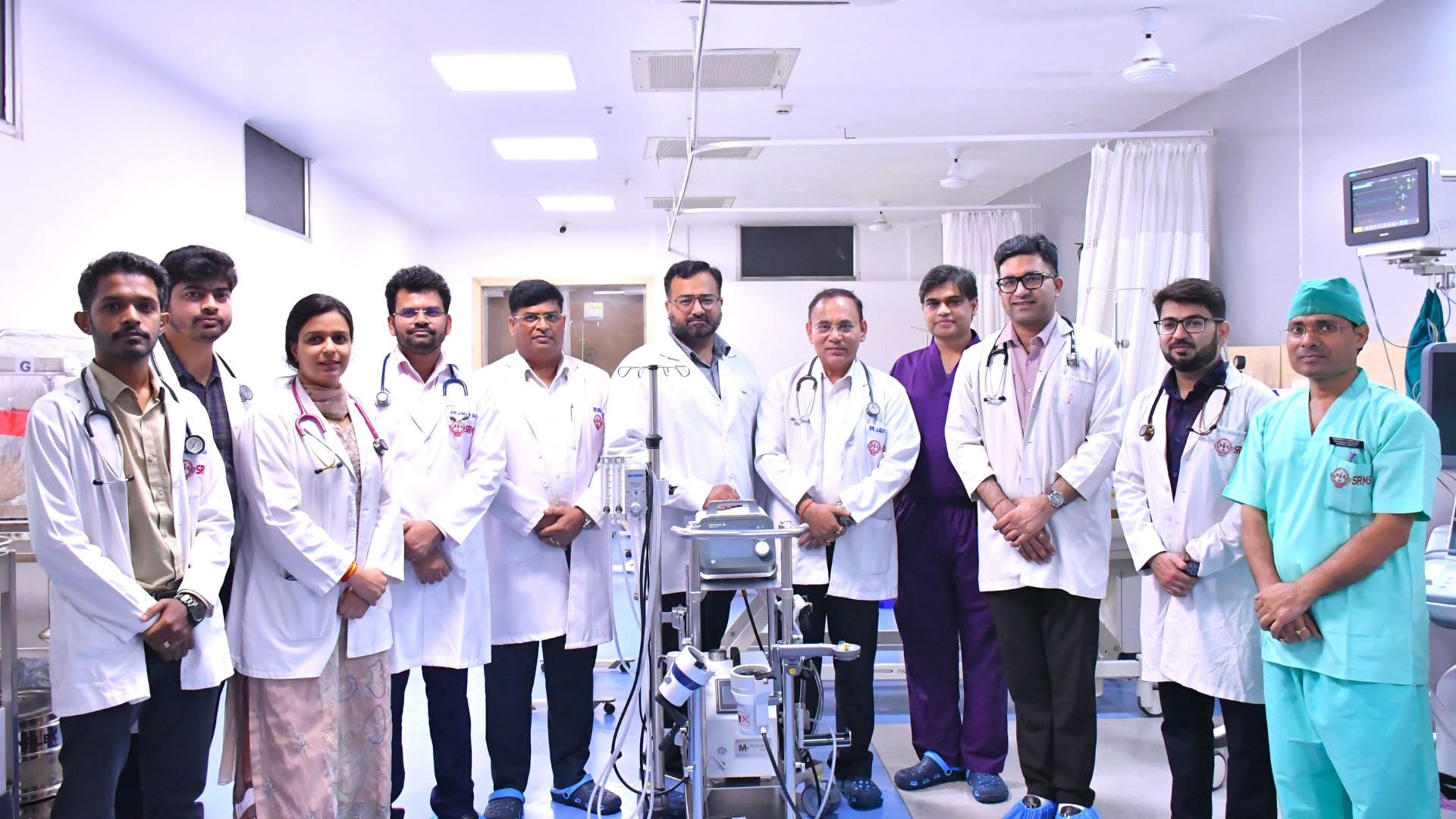
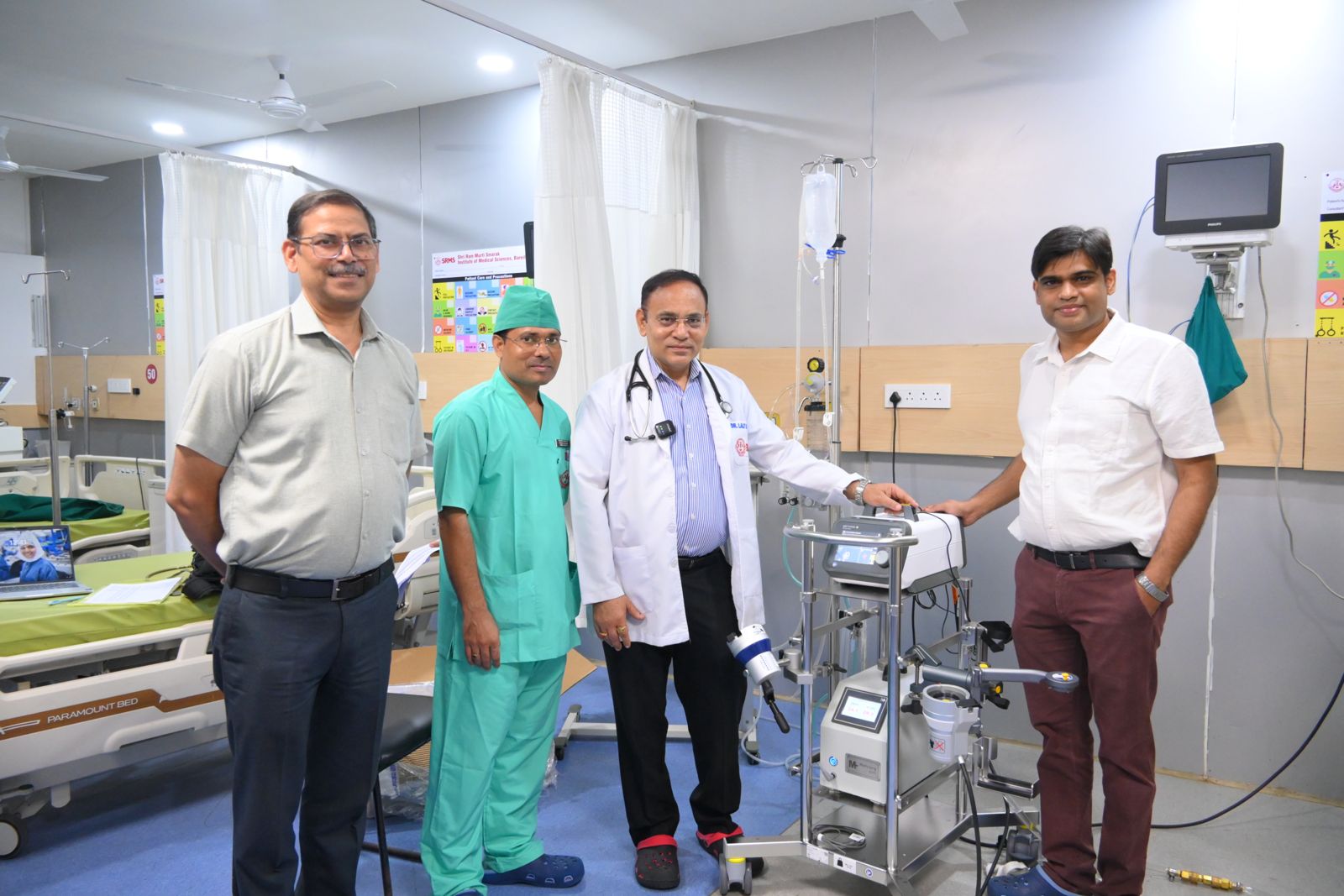
Multidisciplinary critical care team with ECMO equipment at SRMS Institute of Medical Sciences, Bareilly
SRMS Critical Care Team · ECMO Launch, Bareilly
1stECMO Facility, Delhi–Lucknow Corridor
1200+Bed Multi Super Speciality Hospital
24×7Emergency Critical Care
NABHAccredited Facility
Dedicated Critical Care ICU Multidisciplinary ECMO Team Evidence-Based Clinical Protocols Rapid Inter-Hospital Transfer
Understanding ECMO

What is Extracorporeal Membrane Oxygenation?

Extracorporeal Membrane Oxygenation (ECMO) is an advanced life-support system designed to temporarily take over the function of the heart and lungs in patients suffering from severe cardiac or respiratory failure.

Unlike conventional ventilation, ECMO provides continuous oxygenation and blood circulation outside the body, allowing the heart and lungs to rest while the underlying disease is treated.

At SRMS Institute of Medical Sciences, the ECMO programme is led by a dedicated multidisciplinary team of critical care experts using evidence-based protocols and advanced monitoring systems.
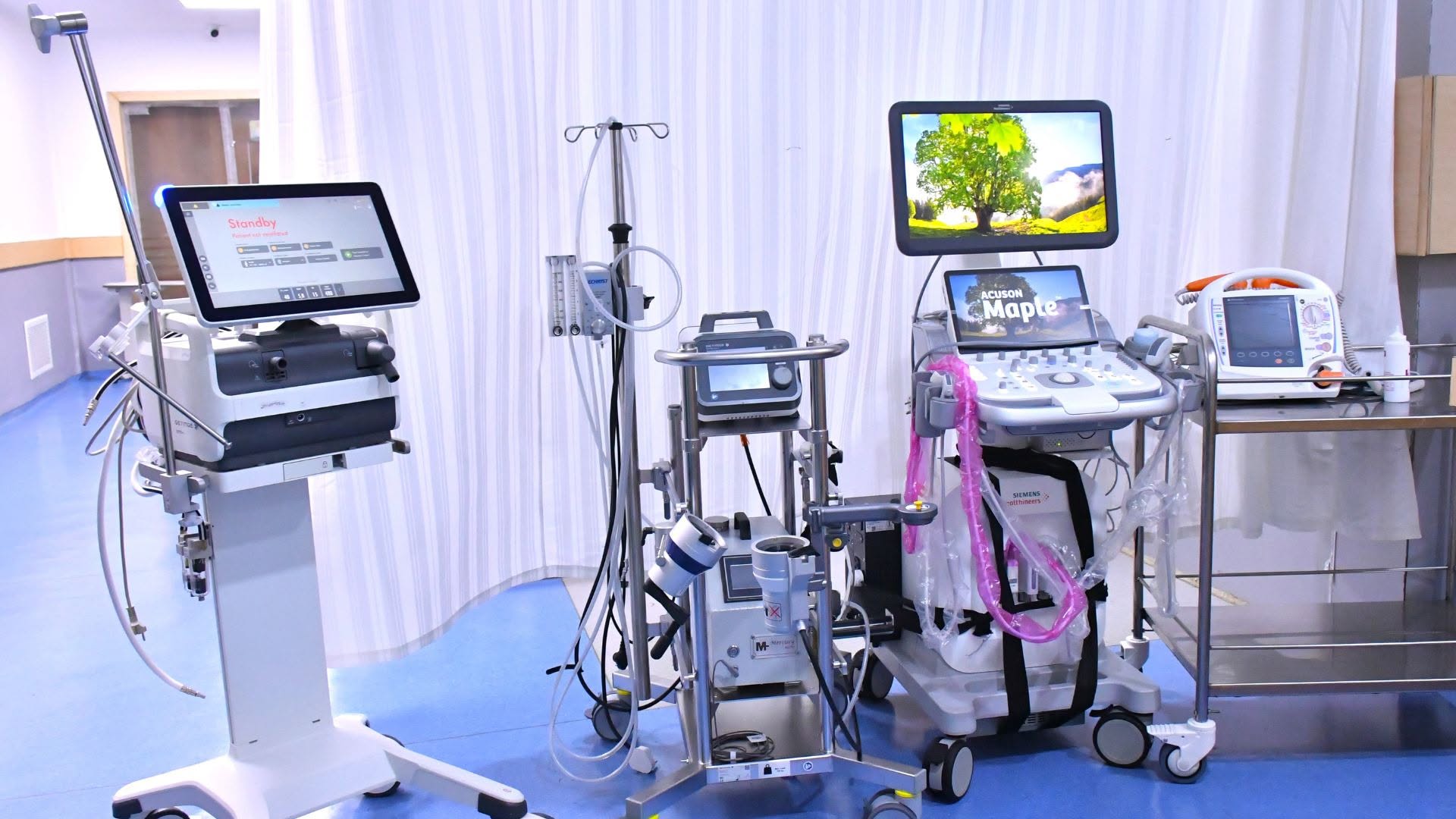
Close-up view of ECMO circuit, ventilator and monitoring equipment at SRMS ICU
Step by step

How Does ECMO Work?

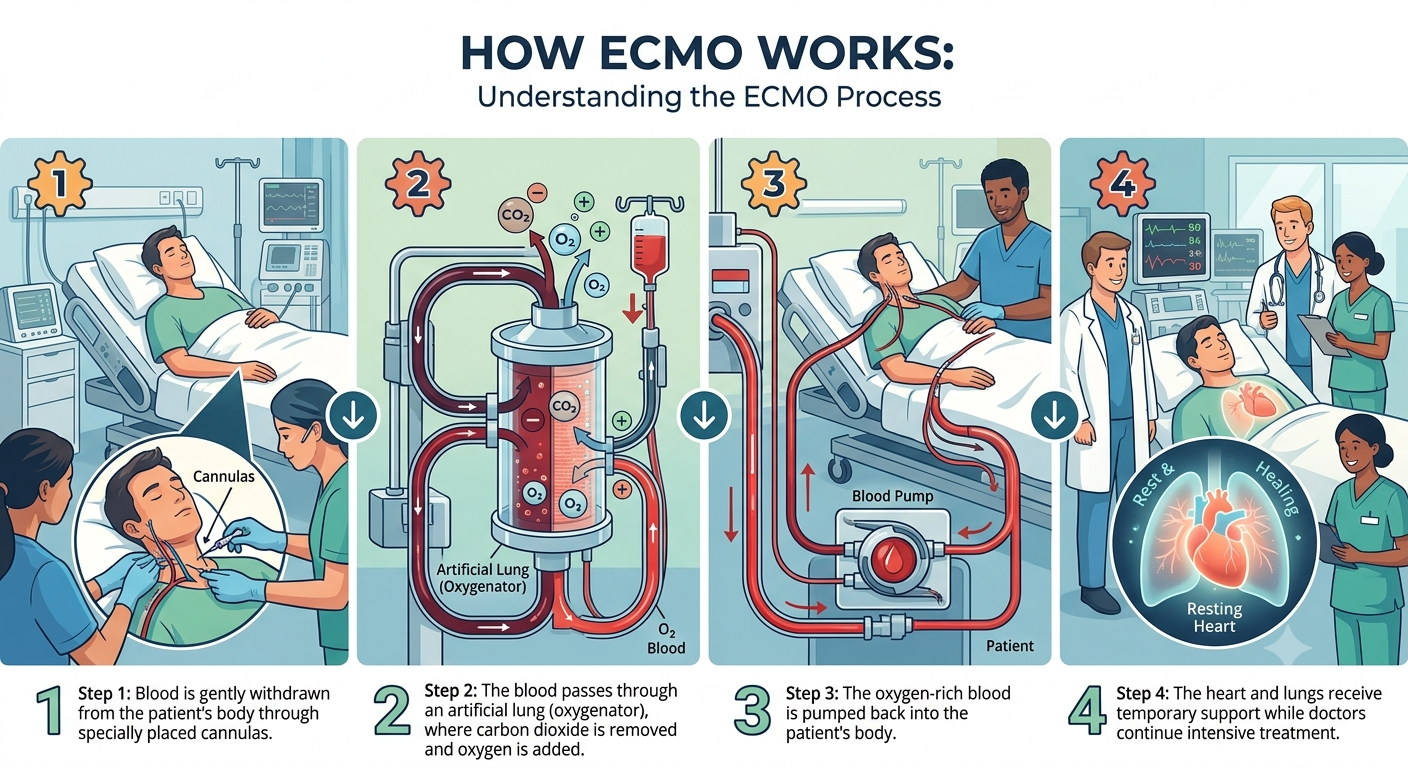
Diagram showing the four steps of how ECMO works: blood withdrawal, oxygenation, return to body, and organ recovery
Blood is withdrawn → oxygenated outside the body → returned to circulation → heart and lungs rest and recover
Clinical role & importance

ECMO Steps in Where Other Support Ends

Considered when mechanical ventilation, medications or circulatory support are no longer sufficient on their own.

Bridge to Recovery

Time to heal

Provides temporary support until heart or lung function improves.

Bridge to Decision

Time to diagnose

Allows time for detailed diagnosis, treatment planning and further interventions.

Bridge to Transplant

Time to wait, safely

Maintains organ function while patients await heart or lung transplantation.

Life-Saving Support

A second chance

Offers survival opportunities in critically ill patients previously considered beyond recovery.

Patient selection

Conditions Where ECMO May Be Recommended

ECMO may be considered for carefully selected patients, following thorough evaluation by the critical care team.

Severe Respiratory Conditions

  • Acute Respiratory Distress Syndrome (ARDS)
  • Severe Pneumonia
  • Respiratory Failure
  • Trauma-related Lung Injury
  • Severe Sepsis affecting lung function

Severe Cardiac Conditions

  • Cardiogenic Shock
  • Severe Heart Failure
  • Post Cardiac Arrest
  • Refractory Cardiac Failure
  • Post Cardiac Surgery Complications

Other Critical Conditions

  • Aluminium Phosphide (Celphos) Poisoning
  • Candidates awaiting Heart Transplant
  • Candidates awaiting Lung Transplant
Early referral is extremely important. Timely initiation of ECMO — before irreversible organ damage — significantly improves outcomes.
Why ECMO helps

Benefits of ECMO Support

  • Advanced temporary heart support
  • Advanced temporary lung support
  • Improves oxygen delivery throughout the body
  • Maintains blood circulation
  • Gives damaged organs time to heal
  • Reduces risk of irreversible organ damage
  • Bridge to recovery or transplantation
  • Improves survival in selected critically ill patients
The people behind the programme

A Multidisciplinary ECMO Team, Ready Round the Clock
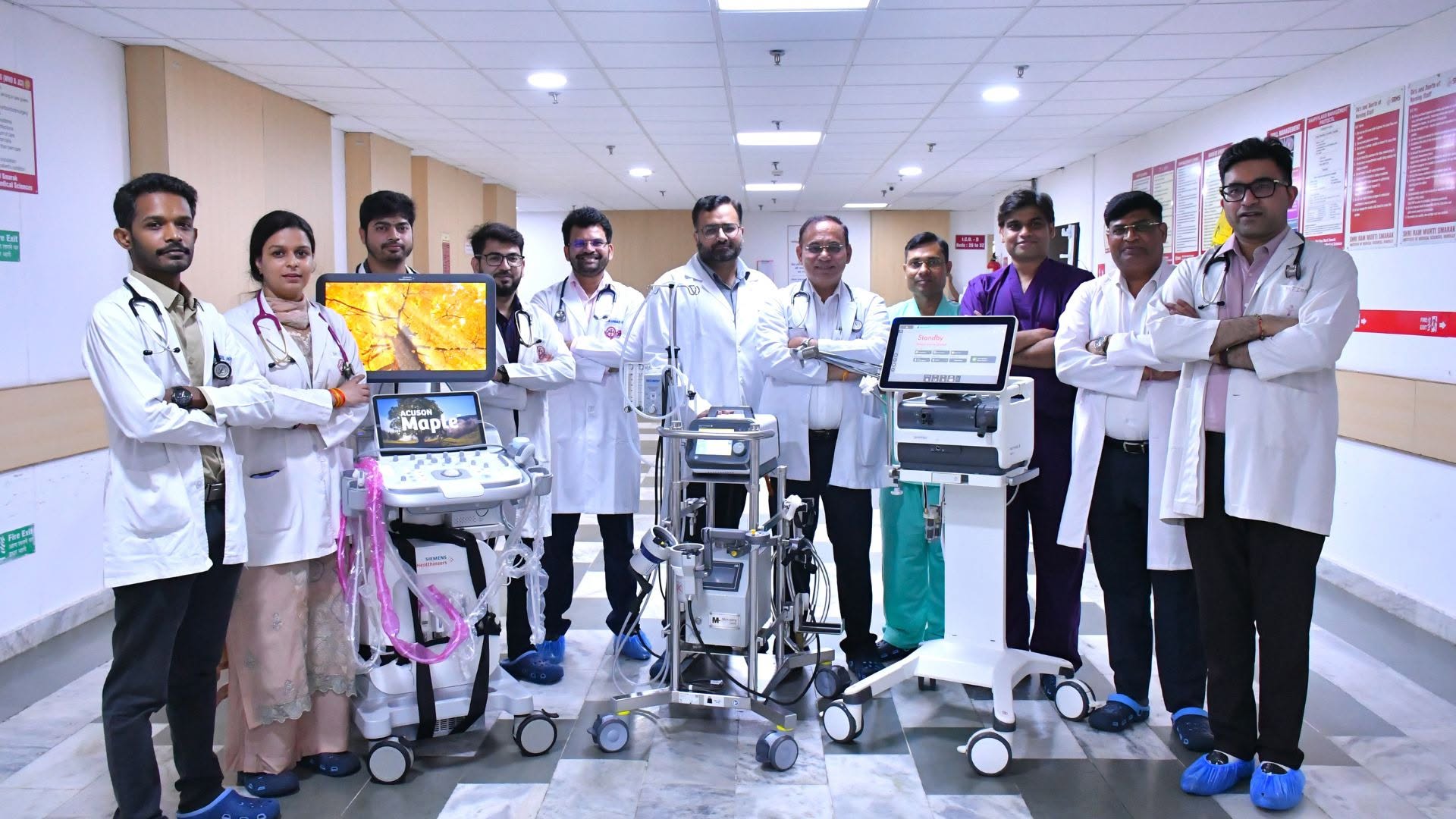
Intensivists Critical Care Physicians Cardiac Surgeons Anaesthesiologists Perfusionists Respiratory Therapists Critical Care Nurses Emergency Medicine Specialists
From admission to recovery

The ECMO Patient Journey

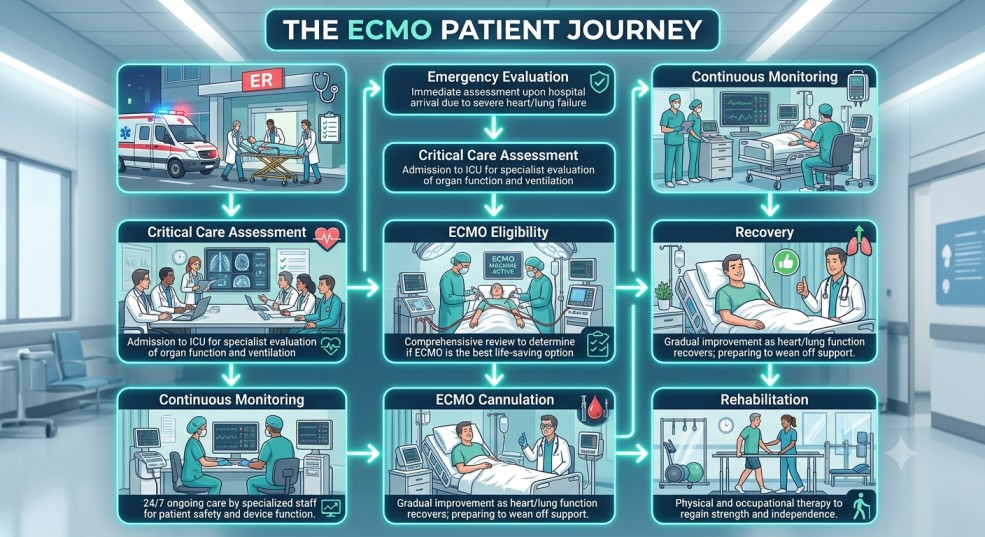
Infographic showing the ECMO patient journey from emergency evaluation through ECMO cannulation to recovery and rehabilitation
Emergency evaluation → ICU assessment → ECMO eligibility & cannulation → continuous monitoring → recovery & rehabilitation
Why choose SRMS ECMO centre

Region's First ECMO Facility Between Delhi & Lucknow

SRMS IMS has established one of the most advanced ECMO programmes in Northern India, enabling critically ill patients to receive world-class life support closer to home.

01

Dedicated ECMO-ready Intensive Care Unit

02

Advanced haemodynamic and respiratory monitoring

03

Experienced Intensivists & Critical Care Specialists

04

ECMO-trained Perfusionists

05

24×7 Emergency Critical Care

06

Rapid Inter-Hospital Transfer Coordination

07

Comprehensive Post-ECMO Rehabilitation

08

Evidence-Based Clinical Protocols

Recovery continues after ECMO ends

Post-ECMO Care & Rehabilitation

Intensive monitoring Organ function assessment Respiratory rehabilitation Nutritional support Physiotherapy Long-term follow-up Multidisciplinary recovery planning
National recognition

Covered by National Media as a Region-First Milestone

The launch of the ECMO facility at SRMS Institute of Medical Sciences has been widely recognised in national media as a major milestone in expanding access to advanced critical care in Northern India.

Economic Times Health
Regional & National Media Platforms
Frequently asked questions

Your ECMO Questions, Answered

Is ECMO the same as a ventilator?
No. A ventilator helps the lungs breathe, while ECMO temporarily performs the function of the lungs and, in some cases, the heart.
Is ECMO permanent?
No. ECMO is temporary life support until the patient's organs recover or another treatment becomes possible.
Can every ICU patient receive ECMO?
No. ECMO is offered only after careful evaluation by experienced specialists.
Is ECMO safe?
ECMO is a highly specialized treatment with potential risks, but when used in the right patient under expert supervision, it can be life-saving.
How long does ECMO treatment continue?
The duration varies depending on the patient's condition and recovery. Some patients require only a few days, while others may need longer support.
What is the cost of ECMO treatment in India?
The cost of ECMO treatment depends on several factors, including the patient's medical condition, duration of ECMO support, ICU stay, medications and associated procedures. Our team provides a detailed treatment plan and estimated cost after evaluating the patient.
ECMO treatment costECMO cost in IndiaECMO hospital cost
Which hospital offers ECMO treatment in Bareilly?
SRMS Institute of Medical Sciences is the first hospital between Delhi and Lucknow to offer advanced ECMO support, providing world-class critical care services closer to patients across Western Uttar Pradesh and Uttarakhand.
ECMO Hospital in BareillyBest ECMO Hospital
What is the success rate of ECMO treatment?
The outcome of ECMO treatment depends on the patient's age, underlying illness, severity of organ failure, and how early ECMO is started. Timely referral and expert management play an important role in improving recovery.
ECMO success rateChances of recovery on ECMO
When should ECMO be started?
ECMO is usually considered when conventional treatments such as mechanical ventilation, medications or other supportive therapies are no longer sufficient. Early referral before irreversible organ damage may improve outcomes.
When is ECMO neededEarly ECMO referral
Is ECMO used for COVID-19 patients?
ECMO may be considered in carefully selected patients with severe respiratory failure caused by COVID-19 or other viral infections when conventional treatments are ineffective. The decision is made by the ECMO team after thorough evaluation.
ECMO for COVIDSevere COVID treatment
Can ECMO save patients with severe lung failure?
ECMO provides temporary support for patients with severe lung failure by oxygenating the blood outside the body. It gives the lungs time to recover while the underlying disease is treated.
Lung failure treatmentECMO for lungs
Can ECMO be used for heart failure?
Yes. ECMO may provide temporary circulatory support for selected patients with severe heart failure, cardiogenic shock or cardiac arrest until recovery or further treatment is possible.
ECMO for heart failureHeart support treatment
Is ECMO painful?
Patients on ECMO are usually critically ill and receive appropriate sedation or pain management as required. The healthcare team closely monitors patient comfort throughout treatment.
What are the risks associated with ECMO?
Like all advanced medical therapies, ECMO has potential risks, including bleeding, infection and blood clotting complications. Patients are continuously monitored by experienced specialists to minimize these risks.
ECMO risksECMO complications
How long does recovery take after ECMO?
Recovery depends on the underlying illness and the patient's overall health. Some patients recover within weeks, while others may require rehabilitation and follow-up care over a longer period.
Recovery after ECMO
Can patients be transferred from another hospital for ECMO?
Yes. Our ECMO team assists referring hospitals with patient evaluation, stabilization guidance and inter-hospital transfer coordination whenever appropriate.
ECMO referralTransfer for ECMO
Does health insurance cover ECMO treatment?
Coverage depends on the patient's insurance policy and insurer. Our patient support team assists families with insurance and cashless treatment-related queries.
Insurance for ECMO treatment
How quickly should a patient reach an ECMO centre?
Time is critical. Patients who may require ECMO should be evaluated as early as possible, because delayed referral can reduce the chances of successful treatment.
Emergency ECMOECMO near me
Who performs ECMO treatment?
ECMO is managed by a multidisciplinary team that includes intensivists, perfusionists, cardiac surgeons, anaesthesiologists, respiratory therapists and specially trained critical care nurses.
ECMO specialistECMO doctor
Why choose SRMS Institute of Medical Sciences for ECMO?
SRMS IMS offers the region's first ECMO facility between Delhi and Lucknow, a dedicated ECMO-ready ICU, an experienced critical care team, advanced monitoring technology, 24×7 emergency services, rapid referral and transfer support, and comprehensive post-ECMO rehabilitation.
Referral & contact

For Urgent ECMO Referrals and Transfers

24×7 Emergency Helpline
94587 06000 Direct line for urgent ECMO referrals and patient transfers
Prof. (Dr.) Lalit Singh MD, FICCM, FECMO, FCCM (USA) Head of Critical Care Medicine
Dr. Nipun Agarwal MD, FECMO ECMO Consultant
Referral guidelines
  • Evaluation of potential ECMO candidates
  • Guidance on patient stabilization
  • Assistance with transport logistics
  • Pre-ECMO optimization
  • Emergency referrals

We encourage physicians and hospitals to contact the ECMO team early — early consultation improves patient outcomes and enables timely intervention.